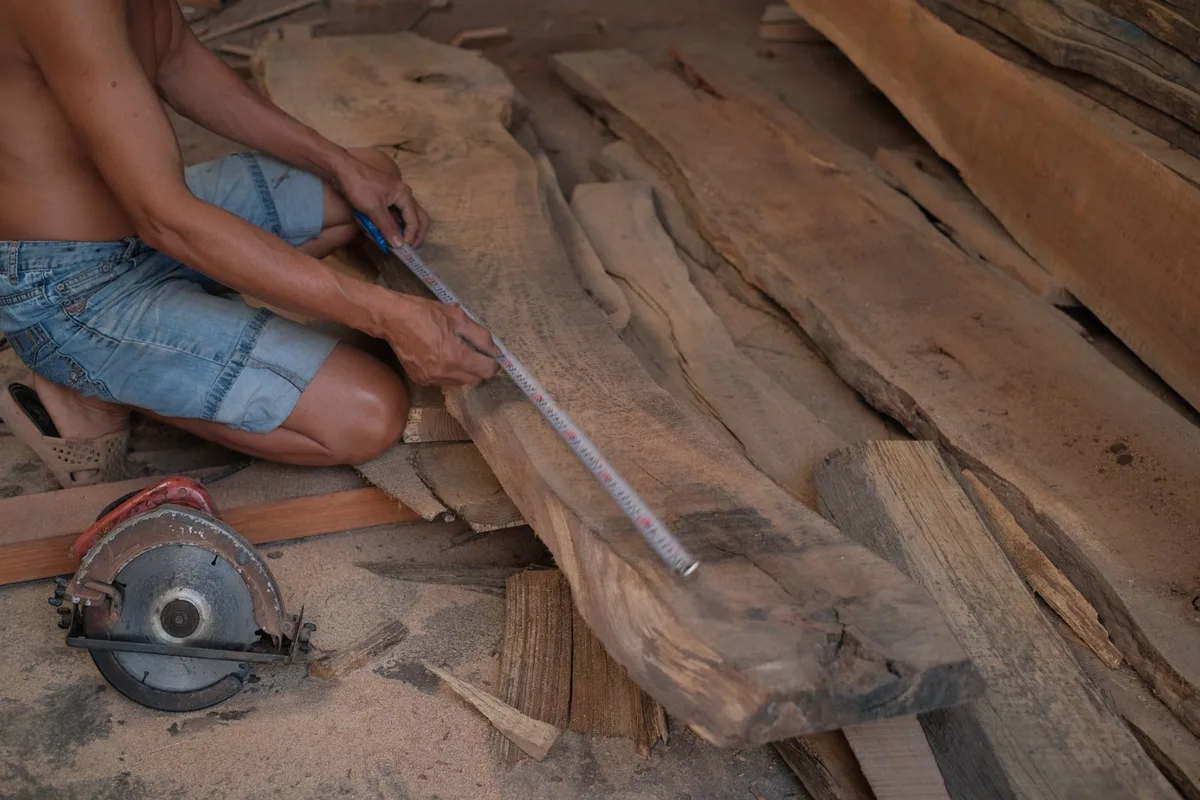
Xero for Carpenters: 9 Powerful Features Carpentry Businesses Will Love (2026)
Affiliate disclosure: This article contains affiliate links. If you sign up for Xero through a link on this page, VantageHub may earn a commission at no extra cost to you. Our reviews stay independent — we recommend tools on their merits, not on commissions.
Running a carpentry business means juggling site visits, timber orders, custom commissions and invoices — often before the sawdust has settled for the day. Xero for carpenters is built for exactly that kind of working day: cloud accounting you can open on your phone between jobs, with invoicing, quotes and bank feeds that keep the books moving while you are in the workshop. This guide walks through the nine features that matter most to carpentry businesses, the honest limits to know about, and what Xero costs for a small workshop in 2026.
Carpenters do not sit at a desk all day, so desktop-only accounting never fitted the trade. Xero for carpenters works because the mobile app carries the whole workflow — measure up a job at a customer’s home, send the quote before you leave, and photograph the timber-yard receipt before it gets lost in the van. The office side stays tidy too: bank feeds reconcile themselves, overdue invoices chase themselves, and your accountant sees the same numbers you do, in real time.
Why Xero for Carpenters Fits the Trade
Most carpentry businesses are small — a sole trader, or a crew of two to ten — and the owner is usually the bookkeeper as well. That is the exact gap Xero for carpenters fills. It replaces the end-of-week pile of paper invoices and the spreadsheet that only one person understands with a single live set of books. Jobs are tracked per customer, timber and hardware are costed against each job, and cash flow is visible before the next supplier bill lands.
It also fits how carpenters actually get paid. Deposits for custom kitchens, staged payments on large joinery projects, and one-off repair jobs all land in the same system, and Xero keeps the paper trail clean enough for tax time. For a trade where margins hide in the timber and the hours, that visibility is worth more than any single feature on its own.
9 Powerful Features of Xero for Carpenters
1. Quotes You Can Send From the Customer’s Kitchen
Xero lets you build a branded quote on your phone, add labour and materials line by line, and email it before you drive away. The customer can accept it online, and an accepted quote converts to an invoice in one tap. For carpenters, where the fastest quote often wins the job, that speed is a genuine edge — and every accepted quote automatically feeds your pipeline of upcoming work. That quote-to-cash speed is the core promise of Xero for carpenters.
2. Invoicing That Follows Up By Itself
Send an invoice from site, set payment terms, and Xero sends polite reminders when a bill goes overdue. You can see at a glance which customers have opened an invoice and which ones need a nudge, so you stop chasing payments by memory. For custom work billed in stages, that follow-up alone can recover hundreds of dollars a month that used to slip through the cracks.
3. Bank Feeds and One-Tap Reconciliation
Xero connects to your business bank account and imports transactions daily. Bank feeds are one of the quiet strengths of Xero for carpenters: matching a payment to an invoice takes one tap, and the system learns your rules — timber-yard payments, fuel, merchant fees — so reconciliation gets faster every week. Our full Xero bank reconciliation guide walks through the setup step by step.
4. Job Costing That Shows Your Real Margin
Every carpentry job has a different mix of labour, timber, hardware and finishing, and Xero’s project tracking lets you cost each one separately. Assign hours and materials to a job, compare the actual cost against the quote, and see which kinds of work actually make money. If fitted wardrobes earn more per hour than repair call-outs, the numbers will tell you — read our project tracking guide for the detail.
5. Receipt Capture for Timber, Hardware and Tools
Photograph a supplier receipt with the Xero app and the expense is logged, categorised and attached to the job before the paper copy disappears. No more shoebox of faded timber-yard receipts at year end. Pair it with the claim expenses feature and your crew can submit their own receipts from the field, ready for your approval.
6. Online Payments on Every Invoice
Add a “Pay now” button to your invoices and customers can settle by card or bank transfer the moment the job is done. Xero integrates with Stripe and other payment providers, and paid invoices reconcile automatically. For a carpentry business running Xero for carpenters, getting paid on the day instead of thirty days later is a cash-flow transformation — see our online payments guide for setup.
7. Payroll for Your Crew, Without the Spreadsheet
As soon as you hire an apprentice or a second carpenter, payroll becomes a weekly chore. Xero’s payroll handles pay runs, leave and tax calculations in the same place as the rest of your books, so wages are already costed against the right jobs. Our payroll guide covers what is included and where it fits for small teams.
8. Multi-User Access for Your Bookkeeper and Accountant
Give your accountant or bookkeeper their own login with the permissions they need — no shared passwords, no emailed spreadsheets. You stay in control of who sees payroll and who only sees invoicing, and everyone works from the same live numbers. Our multi-user access guide explains the permission levels.
9. Pay Bills and Track Supplier Spending
Timber merchants, hardware suppliers and vehicle costs all flow through Xero’s bills feature: enter a supplier invoice, schedule the payment, and see what you owe at any moment. Batch payments clear a week’s supplier bills in minutes, and the audit trail is ready if a supplier ever disputes a payment — see our pay bills guide.
If those nine features sound like your working day, Xero for carpenters is worth a free trial before your next busy week. The setup below takes an afternoon, and you can run it alongside your current system until you are sure.
Xero for Carpenters: Pricing That Fits a Small Workshop
Xero’s international pricing is straightforward, and most carpentry businesses land on the middle plan. Starter costs $29 per month (new customers pay $5.80 per month for the first three months) and covers up to 20 invoices and 5 bills a month — enough for a sole trader doing a handful of jobs a week. Standard costs $50 per month ($10 per month for the first three months) with unlimited invoices and bills, plus bulk reconciliation and budgeting — the right fit once you have a crew and a steady flow of jobs.
Premium costs $75 per month and adds multi-currency and deeper forecasting, which matters mainly if you import specialist timber or work across borders. Full detail is in our Xero pricing plans explained guide. Compared with the cost of one lost invoice or one missed supplier payment, even the top plan pays for itself quickly. Check Xero’s plans and start your free trial to see which tier fits your workshop.
How to Set Up Xero for Your Carpentry Business
Getting started with Xero for carpenters takes an afternoon, not a weekend. First, create your Xero organisation and enter your business details, then connect your bank feed so transactions start flowing in. Next, build your chart of accounts around carpentry income — custom joinery, fitted furniture, repairs — and set up your standard invoice and quote templates with your logo and payment terms.
Import your customer list, add your regular suppliers, and set up tracking categories for each job type so your margins are visible from day one. Finally, invite your accountant, connect a payment provider, and send your first quote from your phone. Our complete Xero guide covers the first-week setup in more depth.
Xero for Carpenters vs the Alternatives
QuickBooks is the closest rival and suits some carpentry firms well, especially in the US — our Xero vs QuickBooks comparison breaks down the differences honestly. FreshBooks is simpler and cheaper for a one-person operation, but it lacks Xero’s job costing and its 1,000-plus app integrations, including job-management tools like Tradify and ServiceM8 that many carpenters run alongside their accounts.
The fair summary for Xero for carpenters: if you want the deepest trade integrations and the strongest multi-user setup, Xero leads; if you want the simplest possible invoicing and nothing else, a lighter tool may do.
Frequently Asked Questions About Xero for Carpenters
Is Xero good for a one-person carpentry business?
Yes. The Starter plan covers a sole trader’s invoicing and bank reconciliation, and the mobile app means the books stay current between jobs. You only pay for more capacity when the business grows into it.
Can Xero handle job management for carpenters?
Xero for carpenters handles the money side — quotes, invoices, job costing and expenses — and integrates with dedicated job-management apps like Tradify, ServiceM8 and Fergus for scheduling and dispatch. Together they cover the full workflow from first call to final payment.
Does Xero work offline on site?
The mobile app needs a connection to sync, but you can draft quotes and invoices anywhere and they send as soon as you are back in coverage. In practice, most job sites have enough signal for the app to work live.
Can my accountant use Xero with my carpentry business?
Yes — invite them as a user with their own login. Accountants who are Xero partners can also access your books through their practice dashboard, and they see the same live figures you do.
Final Verdict: Is Xero for Carpenters Worth It?
For most carpentry businesses, yes. Xero for carpenters earns its keep in three places: quotes and invoices sent from site, bank feeds that make reconciliation a five-minute job, and job costing that shows which work actually pays. The Starter plan is cheap enough for a sole trader, the Standard plan fits a growing crew, and the integrations with trade job-management apps close the one real gap.
The honest limits are real but small: there is no built-in scheduling or dispatch, and the learning curve in the first week is steeper than a bare-bones invoicing app. Neither is a deal-breaker. If your carpentry business still runs on paper invoices and a spreadsheet, Xero is the upgrade that pays for itself in recovered payments and saved evenings.
Start your free Xero trial today and send your next quote from the customer’s kitchen — then check our online invoicing guide to make every invoice land faster.