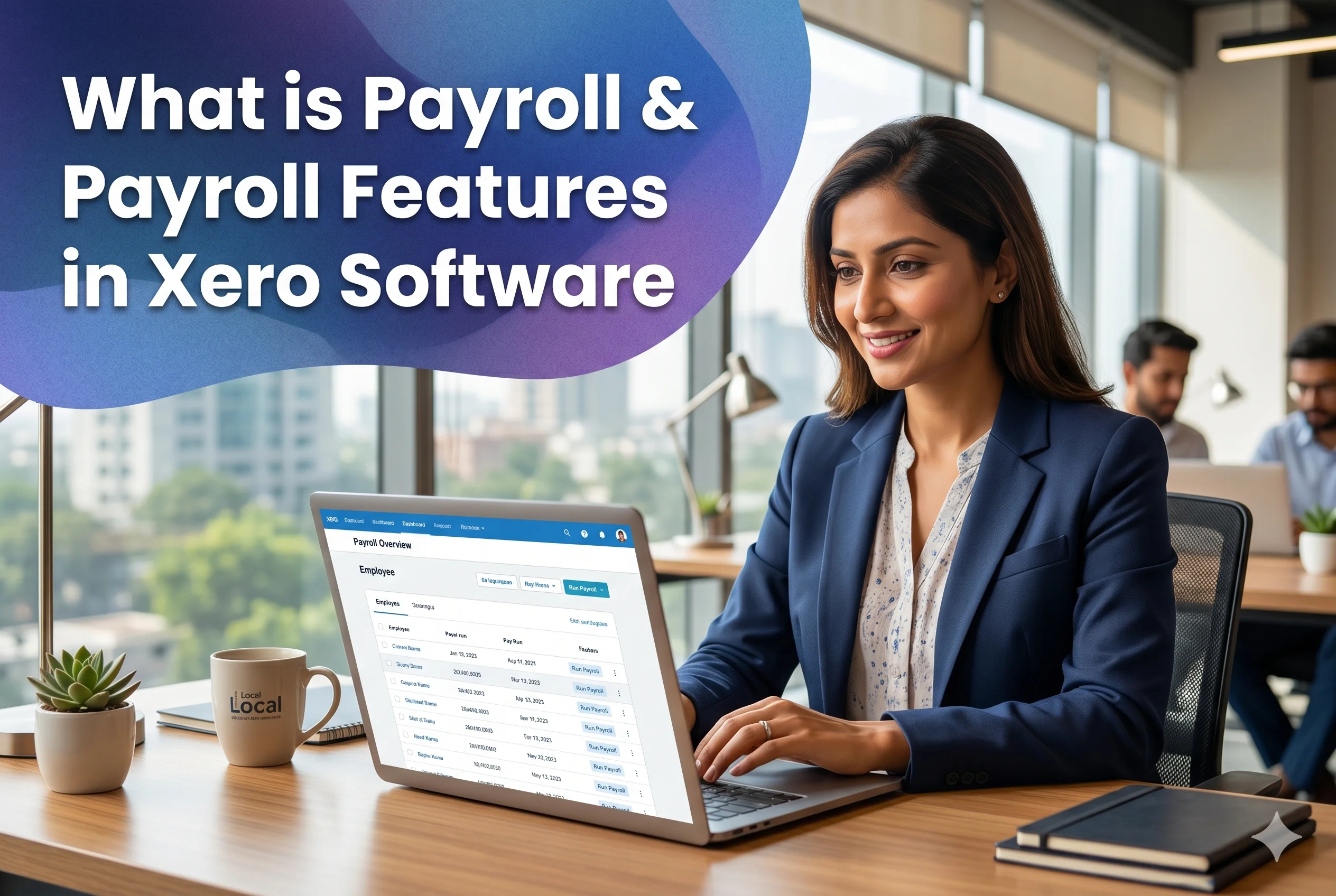
What is Payroll & Payroll Features in Xero Software
Payroll is the process by which a business calculates and pays salaries to its employees. It includes everything related to employee compensation such as:
- Salaries and wages
- Bonuses and incentives
- Tax deductions
- Benefits and allowances
- Payslip generation
Role of Payroll in Accounting
Payroll plays a critical role in accounting because it directly impacts a company’s financial records and compliance. It is responsible for:
- Recording employee expenses in financial statements
- Managing tax obligations (income tax, social security, etc.)
- Ensuring legal compliance with labor laws
- Maintaining accurate financial data for reporting
- Affecting cash flow management due to regular salary payments
In short, payroll is not just about paying employees—it is a core financial function that ensures accuracy, compliance, and transparency in business operations.
Complete Guide to Payroll Feature in Xero
Introduction
Managing payroll manually can be complex, time-consuming, and prone to errors. Businesses must calculate wages, manage deductions, ensure compliance, and maintain accurate records—all while meeting strict deadlines. To simplify this process, Xero offers a powerful Payroll (Pay Runs) feature through integrations with specialized payroll apps.
Xero transforms payroll into a streamlined, automated, and fully digital process, allowing businesses to manage employee payments efficiently while maintaining accurate financial records.
What is Payroll Function in Xero?
In Xero, payroll is handled through integrated third-party payroll applications that connect seamlessly with its accounting system. These apps automate payroll tasks and send data directly into Xero.
Key Idea:
- Payroll processing happens in an integrated app
- Financial data automatically flows into Xero
- Xero provides reporting, insights, and accounting integration
This creates a centralized system where payroll and accounting work together in real time.
How Payroll Works in Xero
Step-by-Step Workflow
Step 1: Set Up Payroll Integration
- Choose a payroll app from Xero App Store
- Connect it with your Xero account
Step 2: Add Employee Details
- Enter employee information
- Define salary, hourly rates, and benefits
Step 3: Configure Pay Structure
- Set payment frequency (weekly, monthly)
- Add tax rules and deductions
Step 4: Run Payroll (Pay Run)
- Calculate wages automatically
- Include bonuses, overtime, deductions
Step 5: Generate Payslips
- Create digital payslips
- Share with employees
Step 6: Sync Data with Xero
- Payroll data flows into accounting records
- Expenses are recorded automatically
Step 7: Reporting and Analysis
- View payroll reports
- Analyze costs and trends
Key Features of Xero Payroll System
Integration with Payroll Apps
Xero connects with leading payroll tools such as:
- Deel
- Rippling
- HReasily
Benefits:
- Flexible payroll solutions
- Global and local payroll support
- Easy integration without technical expertise
Automated Pay Runs
Payroll apps automate the calculation of salaries.
Features:
- Automatic wage calculations
- Tax and deduction handling
- Scheduled pay cycles
Result:
- Faster payroll processing
- Reduced manual errors
Real-Time Data Synchronization
Payroll data is continuously updated in Xero.
Advantages:
- Accurate financial records
- Real-time expense tracking
- Better decision-making
Compliance and Record Keeping
Xero helps businesses stay compliant with regulations.
Capabilities:
- Maintain digital payroll records
- Track tax obligations
- Generate reports for audits
Financial Reporting and Insights
Payroll data integrates with Xero’s reporting system.
Insights include:
- Total payroll expenses
- Employee cost analysis
- Budget vs actual comparisons
Easy Collaboration
Xero’s cloud-based system allows:
- Accountants and teams to access payroll data
- Real-time collaboration
- Faster decision-making
Benefits of Using Payroll Feature in Xero
1. Saves Time and Effort
Automation reduces time spent on:
- Calculations
- Data entry
- Report generation
Improves Accuracy
Eliminates common payroll errors such as:
- Incorrect salary calculations
- Missing deductions
- Manual entry mistakes
Enhances Compliance
Keeps businesses aligned with:
- Tax regulations
- Labor laws
- Reporting requirements
Provides Full Financial Visibility
All payroll data is integrated into Xero, allowing:
- Clear expense tracking
- Accurate financial reporting
- Better budgeting
Supports Business Growth
As businesses grow:
- Add more employees easily
- Handle complex payroll structures
- Scale operations without stress
Better Employee Experience
Employees benefit from:
- Timely payments
- Accurate payslips
- Transparent records
Why Businesses Use Xero for Payroll
Businesses choose Xero because it offers:
- Cloud-based access
- Seamless integration
- Automation of complex tasks
- Real-time financial insights
- Scalability for growing companies
Common Use Cases
1. Small Businesses
- Manage employee salaries easily
- Reduce administrative workload
2. Startups
- Automate payroll from the beginning
- Maintain accurate financial records
3. Global Teams
- Use apps like Deel for international payroll
- Handle multiple currencies and compliance requirements
Best Practices for Using Xero Payroll
To get the most out of payroll:
- Set up accurate employee data
- Review payroll before finalizing
- Use automation for recurring payments
- Regularly check compliance requirements
- Analyze payroll reports for cost control
Conclusion
Payroll is a critical function in any business, directly impacting financial accuracy, compliance, and employee satisfaction. Xero enhances this process by integrating payroll with its powerful accounting system.
Through automation, real-time data synchronization, and seamless integration with specialized payroll apps, Xero transforms payroll into a simple, efficient, and reliable process. Businesses can manage employee payments, maintain compliance, and gain valuable financial insights—all in one place.
In today’s digital era, using a modern payroll system like Xero is not just beneficial—it is essential for efficient business operations and sustainable growth.